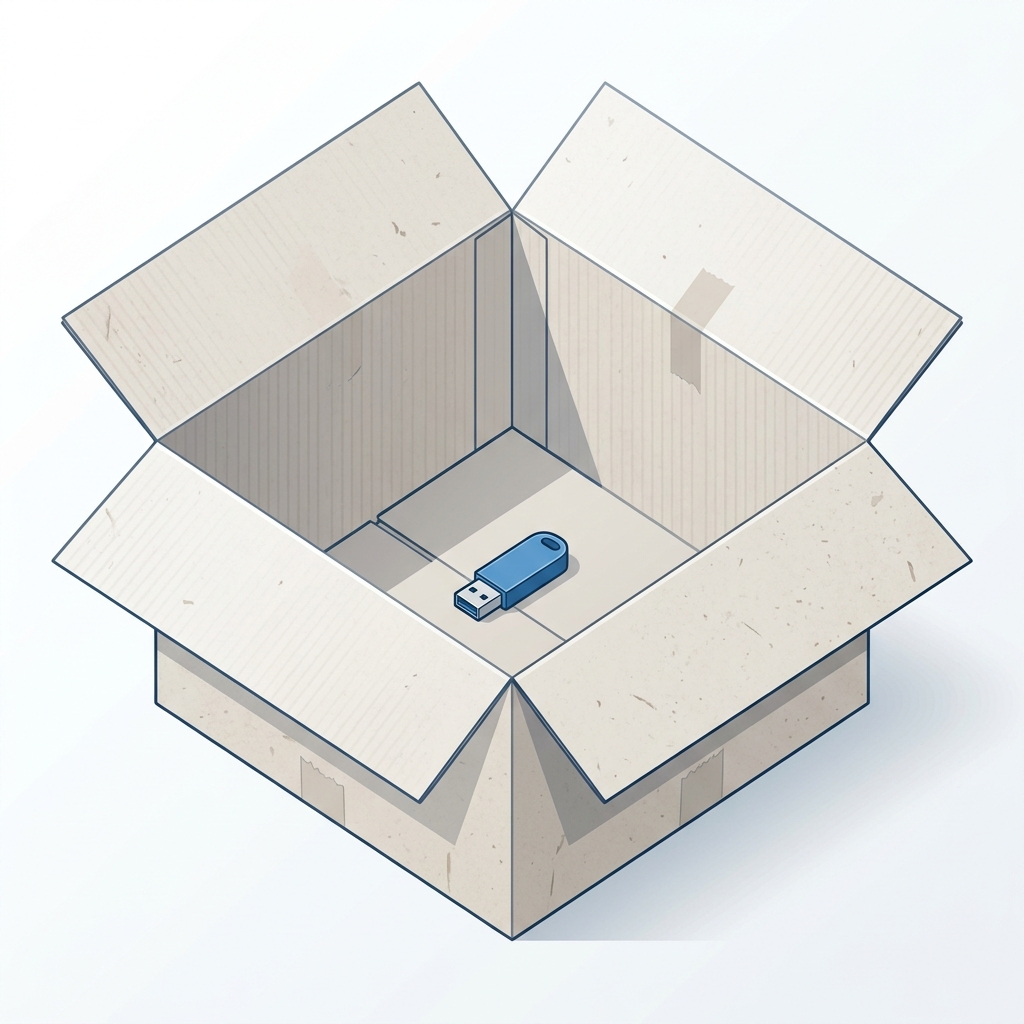
Have you ever shipped a tiny, lightweight flash drive in a massive 20x20x20 box, only to be charged $60 at the FedEx counter? You just fell victim to Dimensional Weight (often called DIM weight).
What is Dimensional Weight?
Historically, shipping companies only cared about one thing: actual scale weight. If your box weighed 5 lbs, you paid the 5 lb rate.
But eventually, e-commerce exploded. Shippers started tossing small items into massive boxes filled with air pillows. Delivery trucks were suddenly "full" of cardboard boxes, but physically empty in terms of actual weight. Because carriers have limited space on airplanes and delivery trucks, they introduced Dimensional Weight.
DIM weight calculates how much space your package takes up, rather than how much it actually weighs. The carrier will always charge you the greater of the two: the actual weight, or the dimensional weight.
The DIM Weight Formula

Calculating dimensional weight is simple math. You multiply the Length x Width x Height of your box (in inches), and then divide by a specific "DIM Divisor" set by the carrier.
📏 The Formula
(Length x Width x Height) ÷ Carrier Divisor = Dimensional Weight
If you have a 12" x 12" x 12" box, your cubic size is 1,728 cubic inches. You then divide 1,728 by the carrier's divisor.
Comparing Carrier Divisors
This is where it gets tricky. The "Divisor" is the secret number carriers use to penalize large boxes. A lower divisor means a higher shipping cost for you.
| Carrier | Standard DIM Divisor | What it means for a 12x12x12 Box |
|---|---|---|
| USPS | 166 | 11 lbs |
| UPS (Retail) | 139 | 13 lbs |
| FedEx (Retail) | 139 | 13 lbs |
Notice how UPS and FedEx use a divisor of 139? That is extremely punitive. If you ship a 12x12x12 box with UPS that only has 1 pound of feathers inside, UPS will charge you the 13 lb rate.
The "One Inch" Mistake
Because DIM weight rounds up, a tiny mistake in your box choice can completely obliterate your profit margins.

Let's say you are shipping a 5 lb item via UPS Ground. You have two boxes lying around your house:
- Box A: 10 x 10 x 10. The DIM weight is 8 lbs. UPS charges you the 8 lb rate.
- Box B: 12 x 12 x 12. The DIM weight is 13 lbs. UPS charges you the 13 lb rate.
Just two extra inches of empty cardboard space on each side could cost you an additional $10 to $15 in shipping fees!
How to Stop Overpaying
⚠️ Poly Mailers Have DIM Weight Too
If you use a soft poly mailer, carriers will measure the bag at its thickest, bulgiest point. If you bunch up the bag and tape it down tightly, you can actually reduce the DIM weight of a poly mailer!
To avoid DIM weight penalties, follow these rules:
- Use the smallest box possible: Cut down the flaps of your box if there is too much empty space at the top.
- Use USPS Flat Rate: Priority Mail Flat Rate boxes completely ignore DIM weight. If it fits, it ships at one flat price regardless of how heavy or dense it is.
- Negotiate your Divisor: If you are a business shipping high volumes, you can negotiate a custom DIM divisor with UPS and FedEx (e.g., getting a 166 or 192 divisor instead of 139).
Never guess your shipping costs again. If you need to check your package, please try our DIM Calculator to instantly see exactly what carriers will charge you before you print a label!